



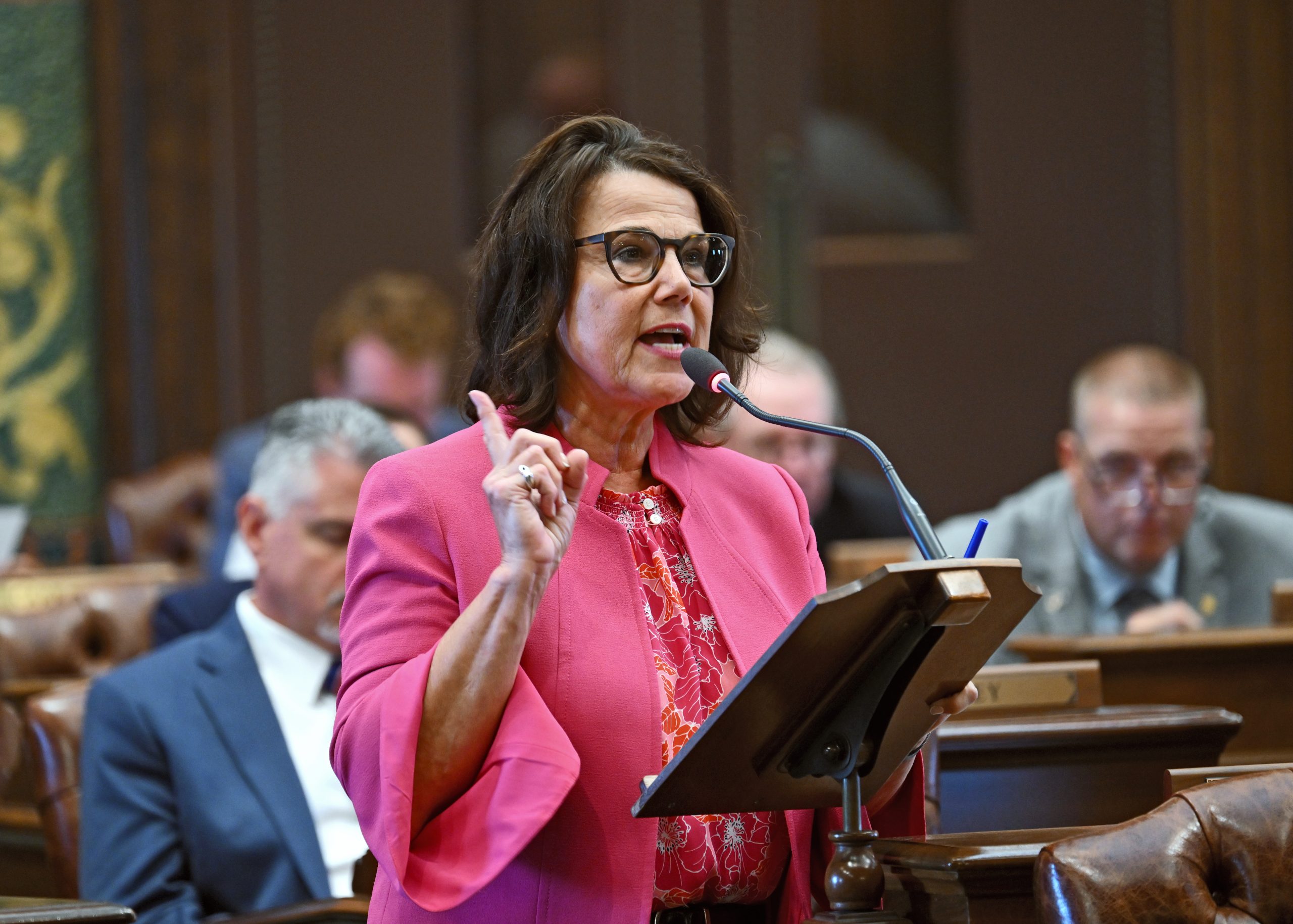
House Appropriations Chair Ann Bollin said the opinion Attorney General Dana Nessel issued on Wednesday regarding work projects is based on inaccurate information.
Bollin said Nessel’s mischaracterization of how work projects function is one of several serious concerns she has raised about the state’s growing reliance on them. The state currently has roughly $10 billion tied up in existing work projects, meaning those dollars are encumbered and unavailable to address more urgent or emerging needs. The FY 2025-26 budget alone includes more than $2 billion in work projects that were negotiated with the administration.
Bollin also expressed concern over the lack of clarity and reliable information provided by state departments when requesting work project approvals. In multiple cases, departments supplied data that was months out of date, and they were unable to clearly account for how much of the funding had already been expended before being proposed as a work project.
“These issues go far beyond a single legal opinion,” Bollin said. “When information is outdated, and even the administration can’t clearly explain where the money stands, that’s a red flag. The Legislature has a duty to ask questions, demand answers, and step in to make sure there is accountability for how tax dollars are spent. That’s exactly what we are doing.”
Bollin said those broader concerns are compounded by what she called a fundamental flaw in the Attorney General’s legal analysis.
In her opinion declaring the House’s disapproval of work projects as unconstitutional, Nessel claims: “A work-project designation does not change what the funds are spent on: it affects only how long they remain available to be spent for that legislatively determined purpose. In other words, the purpose remains fixed by the original appropriation.”
Bollin pointed to multiple cases in which the work project request submitted by the State Budget Office changed the purpose of the funding provided in the FY 2024-25 budget.
“The Attorney General’s opinion ignores the plain facts in front of us,” Bollin said. “The work project requests submitted by the State Budget Office did not simply extend timelines. They repeatedly changed the purpose of the funding that the Legislature had approved. That directly contradicts the claim that work projects only affect availability, not use.”
In several instances, the Whitmer administration asked to use line items budgeted for departmental operations lines to pay for infrastructure or IT projects.
Examples include funding for general operations within the Michigan Department of Corrections being shifted to infrastructure projects; funding for “collections, tax compliance and processing” within the Department of Treasury being shifted to an IT system replacement; and operations for retirement services within the Department of Technology, Management and Budget being shifted to an IT modernization project.




© 2009 - 2026 Michigan House Republicans. All Rights Reserved.
This site is protected by reCAPTCHA and the Google Privacy Policy and Terms of Service apply.